

 اضغط للتكبير
47,500 EGP
غير متوفر حاليًا.
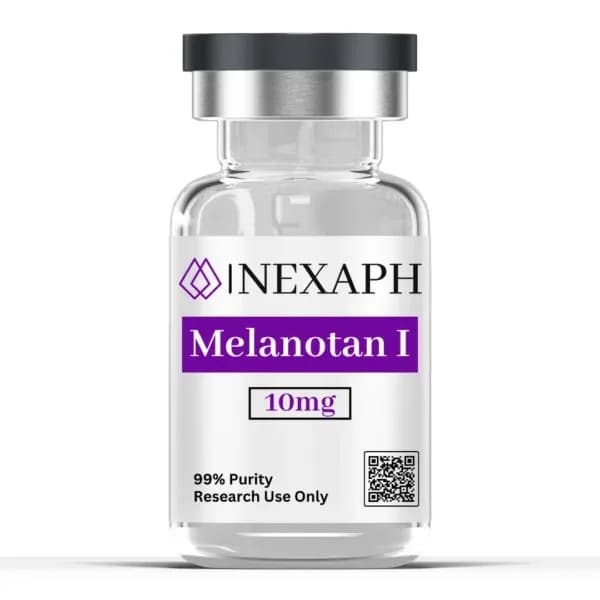
- Advanced Melanogenesis Research: High-purity 10mg Afamelanotide vials designed for studying pigmentation pathways.
- MC1R Selective: Engineered for high affinity to the Melanocortin 1 Receptor with minimal cross-reactivity.
- Enhanced Stability: Modified [Nle4, D-Phe7] sequence ensures resistance to enzymatic degradation in research models.
- Photoprotection Studies: Ideal for investigating systemic eumelanin production and cellular defense against UV radiation.
- Professional Grade: 10-vial kit provided in lyophilized format to ensure maximum shelf-life and chemical integrity.
التوصيل خلال ٢–٤ أيام إرجاع سهل اسأل صيدليًا
لمحة سريعة
النوعمكمل غذائي
الوزن81 جم
الأصالةأصلي بتاريخ تشغيلة
الوصف
Introduction to Afamelanotide Research
Melanotan I (Afamelanotide) represents a significant milestone in the field of peptide chemistry and endocrinology. Developed as a synthetic analogue of the endogenous peptide hormone alpha-melanocyte-stimulating hormone (α-MSH), this compound was engineered to enhance the body’s natural melanogenesis process through systemic interaction with specific receptors. Unlike its naturally occurring counterpart, the molecular structure of inexaph Melanotan I has been optimized for increased potency and biological stability. In research settings, it is utilized to study the mechanisms of skin pigmentation, the role of melanin in cellular protection, and the systemic response to ultraviolet radiation. This 10mg lyophilized format provides researchers with a high-purity tool to explore the biological pathways of the melanocortin system without the rapid enzymatic degradation typically observed with native α-MSH.
The Science of [Nle4, D-Phe7]-α-MSH
The primary innovation behind Melanotan I lies in its amino acid sequence modification. By substituting the fourth amino acid (Met) with Norleucine (Nle) and the seventh amino acid (L-Phe) with D-Phenylalanine (D-Phe), scientists achieved a peptide that exhibits significantly higher affinity for the Melanocortin 1 Receptor (MC1R). This [Nle4, D-Phe7] substitution is critical because it prevents the peptide from being easily broken down by proteolytic enzymes in the plasma, thereby extending its half-life and biological activity.
When Melanotan I binds to the MC1R located on the surface of melanocytes, it initiates a complex intracellular signaling cascade. This process involves the activation of adenylate cyclase, which leads to an increase in intracellular cyclic adenosine monophosphate (cAMP) levels. The elevated cAMP levels subsequently activate protein kinase A (PKA), which then phosphorylates the cAMP response element-binding protein (CREB). This signaling pathway eventually leads to the upregulation of Microphthalmia-associated transcription factor (MITF), the master regulator of melanogenesis. MITF promotes the expression of tyrosinase and other enzymes essential for the synthesis of eumelanin—the dark brown-to-black pigment known for its superior photoprotective properties compared to pheomelanin.
Research Applications: Systemic Photoprotection
One of the most profound areas of study involving inexaph Melanotan I is its role in systemic photoprotection. Eumelanin acts as a physical filter that scatters incoming UV radiation and as a potent chemical filter that scavenges reactive oxygen species (ROS) produced by UV exposure. In research models, the administration of Melanotan I allows for the observation of increased melanin density independent of direct UV exposure. This provides a controlled environment to study how increased pigment levels may protect cellular DNA from thymine dimer formation and oxidative stress. Researchers investigate these effects in the context of various light-sensitive conditions and the general prevention of photodamage. Because it works systemically, it offers a uniform increase in pigmentation across the dermal surface, which is a key area of interest for studying protective mechanisms in skin types that are naturally deficient in eumelanin.
Comparative Dynamics: Selective Receptor Binding
It is essential to distinguish Melanotan I from its related analogue, Melanotan II. From a research perspective, Melanotan I is characterized by its high selectivity for the MC1 receptor. While Melanotan II interacts with a broader range of melanocortin receptors (including MC3R and MC4R, which are involved in appetite regulation and sexual function), Melanotan I remains focused primarily on MC1R, which is expressed on melanocytes. This selectivity makes Melanotan I a more specialized tool for studying melanogenesis and photoprotection specifically, without the confounding systemic effects associated with the activation of other melanocortin receptors. This precision is vital for laboratory studies aiming to isolate the physiological effects of pigmentation from other metabolic or behavioral pathways.
Storage and Technical Handling
To maintain the structural integrity of the 10mg lyophilized peptide, proper storage and handling protocols are mandatory. The peptide should be kept in a controlled environment, preferably at -20°C for long-term storage or 2-8°C for short-term use. Upon reconstitution with Bacteriostatic Water or sterile saline, the peptide becomes more susceptible to degradation and must be refrigerated and used within a specific timeframe (typically 20-30 days). Researchers must avoid vigorous shaking of the vial, as mechanical stress can lead to the denaturation of the delicate peptide chains. Instead, a gentle swirling motion is recommended to ensure the powder is fully dissolved into a clear solution.
Safety and Research Considerations
While Melanotan I is a potent research tool, it is associated with several documented physiological responses in clinical and laboratory literature. Common observations include temporary nausea, facial flushing, and a transient decrease in appetite immediately following administration. A notable effect for researchers to monitor is the darkening of existing nevi (moles) and freckles, which occurs as a result of increased melanocyte activity in these areas. It is imperative to emphasize that this product is intended strictly for laboratory research and in vitro studies. It is not approved for human consumption or therapeutic use. Researchers must exercise caution and adhere to biosafety protocols when handling synthetic peptides to ensure the accuracy and safety of their experimental data.
Frequently Asked Questions
What is the difference between MT-I and MT-II in a research context?Melanotan I is a linear peptide that is highly selective for the MC1 receptor, primarily affecting pigmentation. Melanotan II is a circularized analogue that is non-selective, also binding to MC3 and MC4 receptors, which affects appetite and other physiological processes.
How should inexaph Melanotan I be reconstituted?Reconstitution should be performed using a sterile diluent like Bacteriostatic Water. The liquid should be aimed at the side of the vial and allowed to dissolve the lyophilized powder slowly without agitation.
What are the storage requirements for the 10-vial kit?The un-reconstituted vials should be stored in a freezer at -20°C for maximum shelf life. Once a vial is reconstituted, it must be kept refrigerated between 2°C and 8°C.
What is the primary function of eumelanin in these studies?Eumelanin is studied for its ability to act as a systemic photoprotectant, providing a biological barrier against UV-induced DNA damage and oxidative stress.
يُرجى الملاحظة
هام: قد تُغيّر الجهات المصنّعة شكل المنتج أو تركيبته أو ملصقه في أي وقت ودون إشعار مسبق. التفاصيل الموضّحة في هذه الصفحة للاسترشاد فقط، وقد يختلف المنتج الذي تستلمه عمّا هو معروض هنا. ونحن نضمن أن تستلم نفس المنتج الذي قصدت طلبه، وأن يكون أصليًا — مورَّدًا مباشرةً من الجهة المصنّعة أو أحد وكلائها المعتمدين أو موزّعيها الرسميين. اقرأ دائمًا الملصق الموجود على المنتج الذي تستلمه قبل الاستخدام.
أسئلة وأجوبة
لا توجد أسئلة بعد — اسأل أول سؤال وسيجيبك صيادلتنا.
المراجعات
لا توجد مراجعات بعد — كن أول من يراجع هذا المنتج.
قد يعجبك أيضًا